| Gas chromatography (GC) analysis |
Chromatographic analysis of mixtures, qualitative and/or quantitative analysis of their composition, and identification of components by mass spectrometry (MS). |
| Determination of polymer molecular weight |
Determination of the molecular weight of polymers (solvent-based resins), useful for material characterisation and comparison of product batches. |
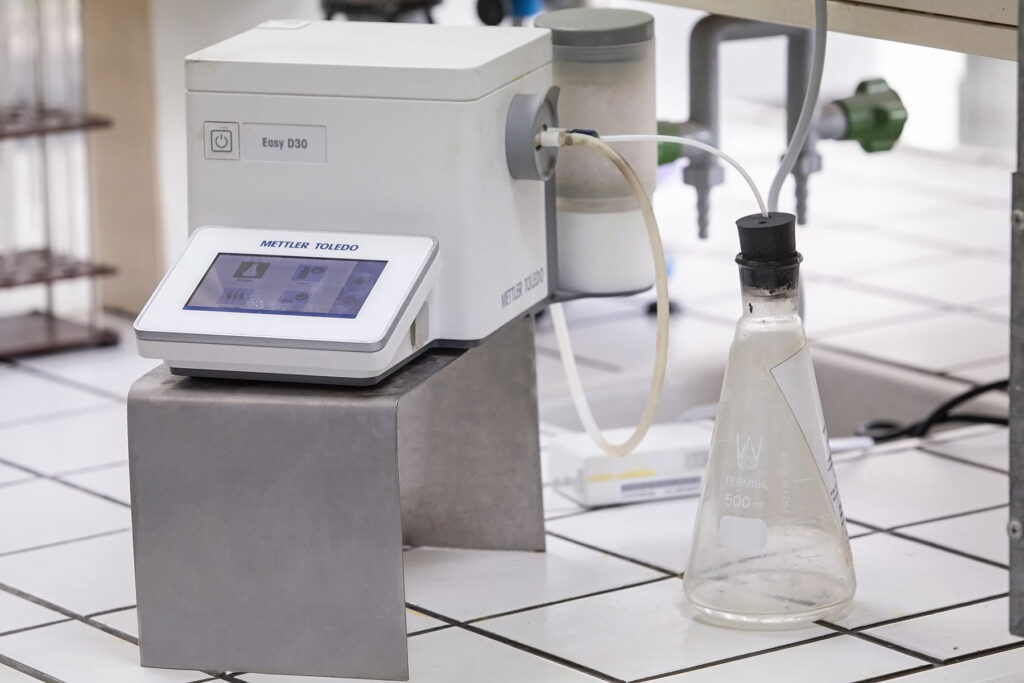
| Determination of water content in solvents |
Measurement of water content in liquid raw materials (monomers, solvents), important for raw material quality control and their use in production processes. |
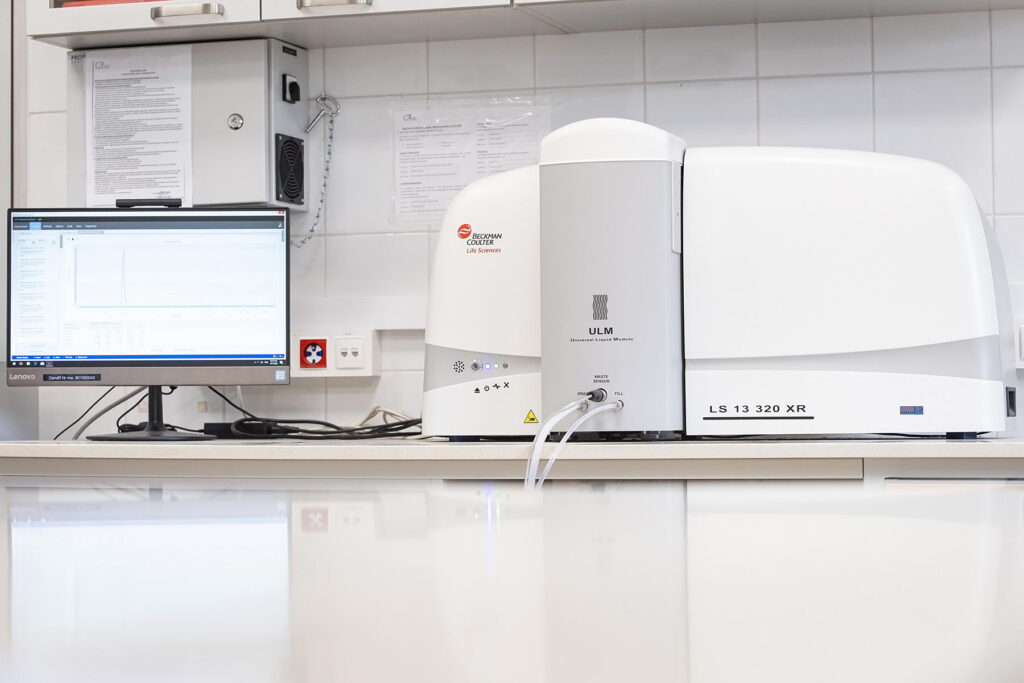
| Determination of average particle size in dispersions |
Measurement of the average particle size of the dispersed phase, useful for characterising dispersions and assessing product consistency. |
| Infrared (IR) analysis |
Recording of the IR spectrum of a polymer or raw material sample to support the identification of functional groups present in the sample and the comparison of materials. |
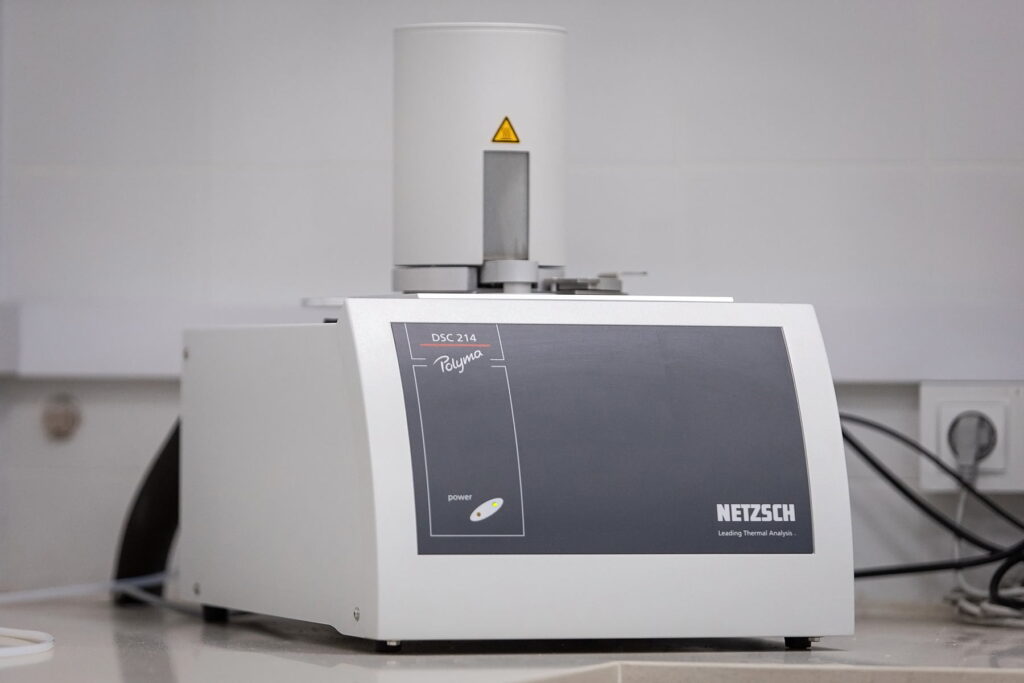
| DSC analysis |
Determination of the glass transition temperature (Tg) by differential scanning calorimetry. The analysis identifies the transition associated with changes in polymer stiffness and flexibility, which is relevant to its end-use properties. |
| Determination of minimum film-forming temperature (MFFT) |
Determination of the lowest temperature at which a dispersion forms a continuous film under the test conditions. |
| Rheological testing (viscosity determination) |
Assessment of material flow and deformation under specified measurement conditions, useful for analysing processing and application properties. |
| Hardness determination by pendulum damping |
Measurement of sample hardness, useful for comparing material properties and assessing changes occurring during curing. |
| Determination of drying time |
Determination of the time required for a coating to reach specified stages of drying under defined conditions. |
| Determination of gel time |
For two-component systems (resin + hardener), determination of the time taken for a sample to reach the gel state under defined test conditions. |
| Determination of refractive index |
Measurement of refractive index for material characterisation and comparison of samples. |
| Determination of density |
Determination of the mass per unit volume of a material at a specified temperature, useful for quality control and process calculations. |
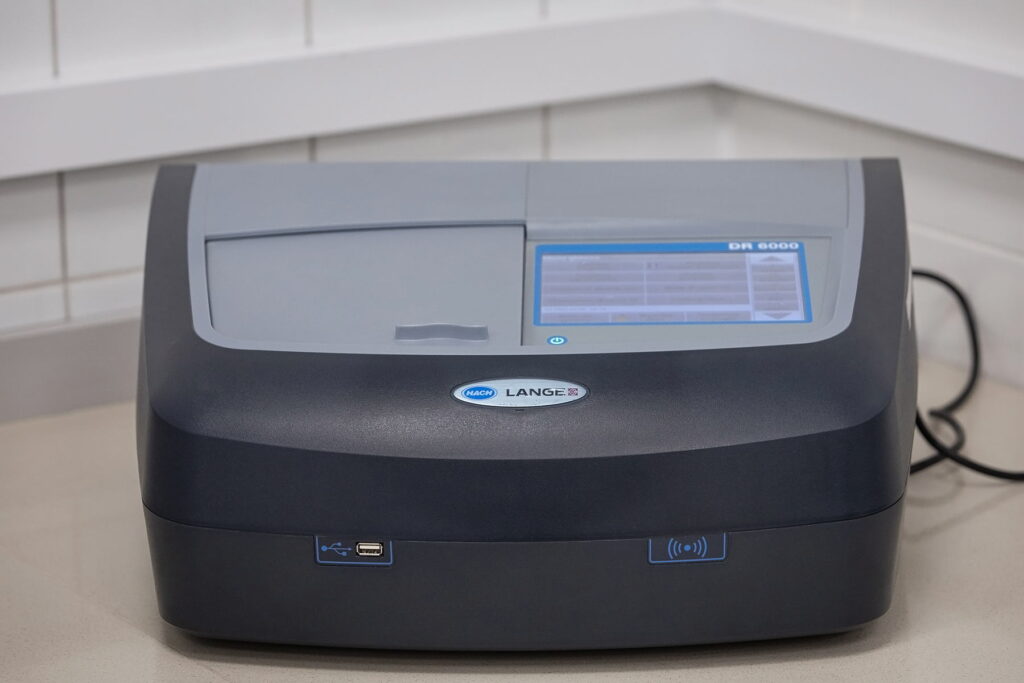
| Determination of solution colour using the Gardner, Pt-Co/Hazen, iodine, Saybolt and EBC scales |
Assessment of solution colour using an appropriately selected scale, enabling comparison of samples and verification of compliance with requirements. |
| Determination of melting point |
Determination of the temperature or temperature range at which a sample changes from a solid to a liquid state (for solid raw materials). |
| Determination of acid value |
Assessment of the content of acidic components, useful for raw material quality control and monitoring reaction progress. |
| Determination of hydroxyl value |
Assessment of the content of free hydroxyl groups (–OH), important for characterising raw materials and resins and determining component ratios in two-component systems (resin + hardener). |
| Determination of iodine value |
Assessment of the degree of unsaturation of a material associated with the presence of double bonds. |
| Determination of NCO group content |
Measurement of isocyanate group content, important, among other applications, for quality control of raw materials and products for polyurethane systems. |
| Determination of epoxy equivalent weight |
Determination of the mass of material containing one mole of epoxy groups. This parameter helps determine the appropriate resin-to-hardener ratio. |
| Viscosity determination using the BYK-Gardner tube method |
Comparative assessment of liquid viscosity using reference tubes, useful for quality control of resins and varnishes. |
| Viscosity determination using the cone-and-plate method |
Measurement of viscosity under specified shear conditions, useful for assessing the processing and application properties of a material. |
| Viscosity determination using a rotational viscometer |
Measurement of viscosity by the rotational method, useful for monitoring material consistency and comparing product batches. |
| Scrub resistance testing |
Assessment of a coating’s resistance to repeated scrubbing under defined test conditions. |